Recent Posts


Newsletter
Sign up to get update news about us


At NZWorker, we provide a comprehensive range of legal services and trusted guidance. Explore our offerings and contact us for support with any legal matter
NZWorker: Expert legal services and guidance you can trust. Contact us today for support with any legal issue.
Immigration Law
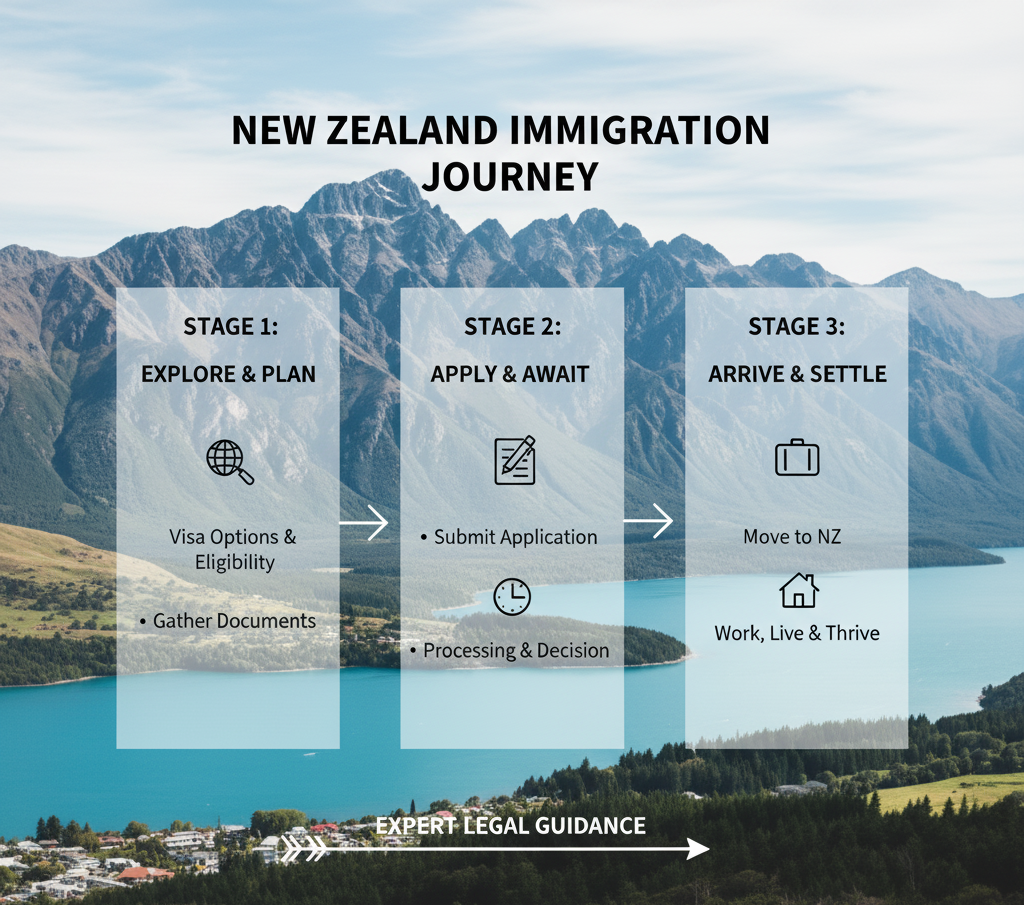
-Work Visas
These visas are for those who want to work in New Zealand. The most common type is the Accredited Employer Work Visa (AEWV), which requires an individual to have a job offer from an accredited employer. Other types, such as the Post Study Work Visa, are available for international students who have completed their studies in New Zealand.
+ Special Direction Requests to the Minister of Immigration
This is an option for individuals whose immigration cases have exhausted all other avenues. A Special Direction is a request made directly to the Minister of Immigration to intervene in a case that has exceptional, compelling, or humanitarian circumstances. Granting a special direction is at the Minister's absolute discretion and is rarely used.
+ Visitor Visas
A visitor visa allows a person to visit New Zealand for a temporary period for a holiday, to see family and friends, or for short-term, non-work-related activities. Depending on the passport they hold, some people may not need to apply for a visitor visa. Generally, a visitor visa allows a stay of up to 9 months in any 18-month period.
+ Medical and Character Waivers
These waivers provide a pathway for applicants who do not meet the standard health or character requirements for a visa. A medical waiver can be requested if an applicant's medical condition does not meet the "acceptable standard of health" criteria, while a character waiver can be requested for issues like past criminal convictions. Each case is assessed individually, and the decision to grant a waiver is at the discretion of Immigration New Zealand.
+ Request for a Reconsideration
If a temporary visa application is declined, the applicant may be able to submit a reconsideration request to Immigration New Zealand. This allows them to highlight errors in the initial assessment or provide new information that was not considered. A reconsideration request must be made within a specific timeframe after the declined decision.
+ NZ Citizenship Applications
An application for New Zealand citizenship is the final step in a migrant's journey to becoming an official citizen. It's managed by the Department of Internal Affairs, not Immigration New Zealand. To be eligible, a person must have held a resident visa for a certain period and meet specific "presence" requirements in the country.
+ Deportation (Resident) Appeals
If a New Zealand resident is issued a deportation order, they may have the right to appeal the decision to the Immigration and Protection Tribunal (IPT). The grounds for appeal and the timeframe for lodging it depend on the reason for the deportation liability.
+ Partnership Residence Visas
These visas are for people who are in a genuine and stable relationship with a New Zealand citizen or resident. This visa allows the holder to live in New Zealand indefinitely and may lead to a Permanent Resident Visa after a certain period. The application requires extensive evidence to prove the genuine nature of the relationship.
+ Victims of Domestic Violence Visas
New Zealand provides a pathway to residency for partners of New Zealand citizens or residents who have experienced family violence. This visa allows the victim to separate from their abuser and remain in New Zealand independently. The application requires specific evidence of the violence and the inability to return to their home country.
+ Student Visas
A student visa allows international students to study full-time at an approved education provider in New Zealand. There are different types of student visas, including the Pathway Student Visa, which can cover up to three consecutive courses on a single visa.
+ Section 61 requests
Under Section 61 of the Immigration Act 2009, Immigration New Zealand has the discretion to grant a visa to a person who is in New Zealand unlawfully. This is often a last resort for individuals who have overstayed their visa or have no other legal means to remain in the country.
Refugee Law
- Humanitarian Appeals
A humanitarian appeal in New Zealand is a formal process for individuals facing deportation to appeal their case on the basis of exceptional humanitarian circumstances that would make it unjust or unduly harsh for them to be deported. This is a very high threshold to meet and often involves showing how being forced to leave the country would cause significant and unique hardship. These appeals are heard by the Immigration and Protection Tribunal.
+ Representing refugee and protected persons
This refers to the legal and advisory services provided to people seeking refugee or protected person status in New Zealand. A person is considered a refugee under the 1951 Convention Relating to the Status of Refugees, while a protected person is someone who would face a real risk of torture or other severe harm if they returned to their home country. The representation involves helping them through the process of lodging a claim and, if necessary, appealing a decision.
+ Refugee Family Support Category Resident Visa Applications
This is a specific resident visa category that allows New Zealand citizens or residents who were granted residence as a refugee or protected person to sponsor their family members from overseas to come and live with them in New Zealand. There is an annual cap on the number of visas available under this category. Sponsors must first register with Immigration New Zealand, and if their registration is selected, their family can then apply for the visa.
+ Judicial Review of Decisions Made by Immigration New Zealand
A judicial review is a legal action taken to challenge a decision made by a government agency, such as Immigration New Zealand. Unlike an appeal, a judicial review does not re-examine the merits of the decision itself but rather reviews the process by which the decision was made. The High Court can decide if the decision was made lawfully and fairly. A successful judicial review may result in the case being sent back to Immigration New Zealand for a fresh decision.
+ Refugee and Protection Appeals
If a person's claim for refugee or protected person status is declined by Immigration New Zealand, they have the right to appeal the decision to the Immigration and Protection Tribunal (IPT). The Tribunal is an independent body that reviews the case to determine whether the person meets the criteria for refugee or protected person status under New Zealand law and international conventions.
+ Representing refugee and protected persons
This refers to the legal and advisory services provided to people seeking refugee or protected person status in New Zealand. A person is considered a refugee under the 1951 Convention Relating to the Status of Refugees, while a protected person is someone who would face a real risk of torture or other severe harm if they returned to their home country. The representation involves helping them through the process of lodging a claim and, if necessary, appealing a decision.
Criminal Law
- Driving While Disqualified
In New Zealand, it is a criminal offence to drive a vehicle while you are disqualified from holding or obtaining a driver's licence. The penalties for this can be severe, including a further period of disqualification, a fine, and even imprisonment, especially for repeat offenders.
+ Breach of Protection Order
A Protection Order is a court order designed to protect a person and their children from family violence. It prohibits the person who the order is against from having contact with, or using violence against, the protected person. A breach of this order is a serious criminal offence and can result in a fine or imprisonment.
+ Limited Licences
A limited licence, also known as a work licence or a restricted licence, is a special licence that may be granted by the court to a person who has been disqualified from driving. It allows them to drive for specific purposes, such as for their job or to transport a dependent family member. The criteria for obtaining a limited licence are strict, and it is a privilege, not a right.
+ Property Offences
This is a broad category of criminal offences that involve damage to or taking of property. Common examples under New Zealand law include burglary, theft, receiving stolen goods, and intentional damage to property. The severity of the offence and the penalty depend on the value of the property and the circumstances of the crime.
+ Careless Driving
Careless driving is a traffic offence where a person drives a vehicle without the level of care and attention that a reasonable and prudent driver would exercise. This offence is dealt with under the Land Transport Act 1998. If it results in injury or death, the charge can become more serious and can be punishable by a fine or imprisonment.
+ Failing to Stop
Under New Zealand law, drivers are required to stop and remain at the scene of an accident in which they are involved. Failing to stop can lead to criminal charges, particularly if the accident results in injury or death.
+ Drink Driving
In New Zealand, it is an offence to drive with a blood alcohol concentration (BAC) over the legal limit. The penalties for drink driving can include a fine, a period of driver licence disqualification, and an order to use an alcohol interlock device. Repeat offenders and those with a high BAC face more severe penalties, including imprisonment.
+ Male Assault Female
This is not a specific legal term in New Zealand but refers to the criminal offence of assault on a female, which is often a form of family violence. Under New Zealand law, assault is defined as an act that intentionally or recklessly causes a person to fear immediate violence or causes a physical injury. The penalties for assault are the same regardless of gender.
+ Bail Applications
When a person is charged with a criminal offence, they may apply to the court for bail, which allows them to be released from custody until their next court appearance. A judge will consider several factors when deciding on a bail application, including the seriousness of the offence, the risk of the person re-offending, or the risk of them not turning up for their next court date.
+ Supplying, Manufacturing and Importing Drugs
These are all serious drug offences under the Misuse of Drugs Act 1975. The penalties for these offences are severe and depend on the class of the drug (A, B, or C) and the quantity involved.
+ Sexual Offences
Sexual offences are serious crimes under New Zealand law and are dealt with under the Crimes Act 1961. This category includes offences such as sexual violation (rape), indecent assault, and sexual conduct with a young person. Penalties for these crimes are often very high and can result in lengthy prison sentences.
+ Threatening behavior
Threatening behavior, such as making threats to kill or to cause grievous bodily harm, is a criminal offence under the Crimes Act 1961. The offence can be prosecuted as an assault or as a separate charge, depending on the circumstances.
+ Discharge Without Conviction
A discharge without conviction is a sentencing option in New Zealand courts. A judge may grant a discharge if the consequences of a conviction would be out of proportion to the gravity of the offence. This means that while the person is found guilty of the offence, they do not have a criminal conviction recorded against their name.
+ Fraud
Fraud is a general term for a variety of dishonest acts that lead to a person or an organization gaining an advantage. In New Zealand, fraud can be prosecuted under the Crimes Act 1961 as offences such as obtaining by deception or forgery.
+ Firearm Offences
These are a range of criminal offences involving firearms, regulated by the Arms Act 1983. Examples include possessing a firearm without a licence, unlawfully carrying a firearm, or using a firearm in the commission of a crime. The penalties for firearm offences are severe.
+ Driving Without a Licence
This is a summary offence under the Land Transport Act 1998. It is an offence to drive a vehicle on a public road without holding a valid New Zealand driver's licence. The penalties for this offence are a fine and, in some cases, a period of disqualification from driving.